Known as Persia until 1935, Iran became an Islamic republic in 1979 after the ruling Shah was forced into exile.
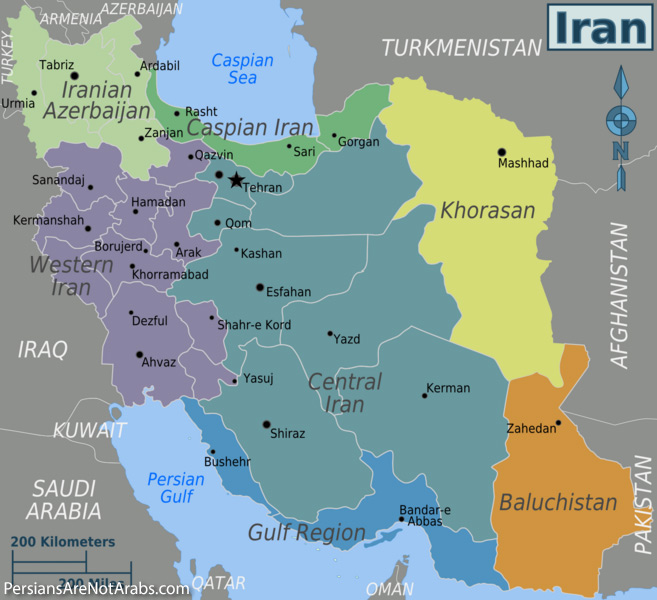
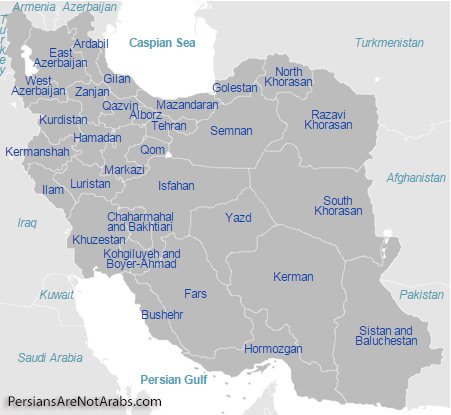
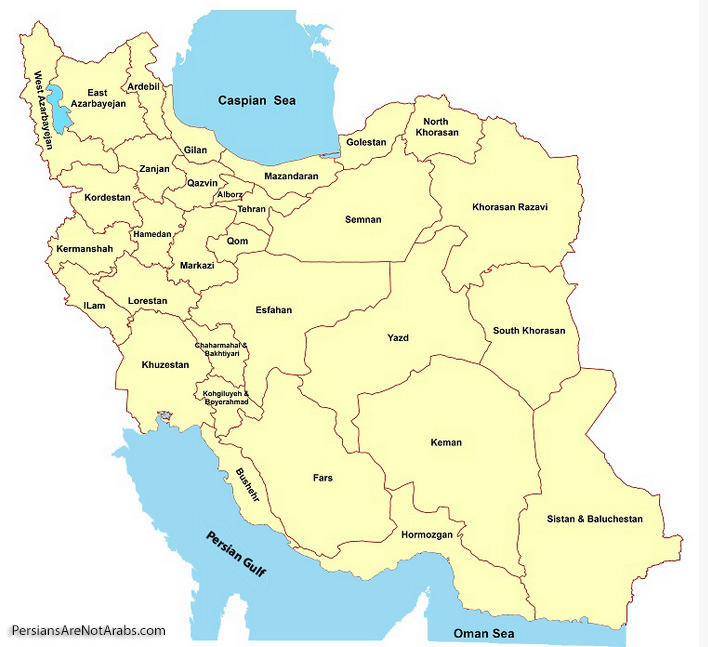
Iran is a large country in the Middle East and West Asia, between the Gulf of Oman, the Persian Gulf, and the Caspian Sea. It shares borders with Iraq, Turkey, Azerbaijan, Turkmenistan, Armenia, Afghanistan, and Pakistan.
Government
Iran has been an Islamic theocracy since the Pahlavi monarchy was overthrown on Feb. 11, 1979.
Nomads of Iran
Iran has many people other than ethnic Persians. The northwestern region, Azerbaijan, is largely populated by Azeris, who are ethnically and linguistically related to Turkish. The province of West Azerbaijan is both Azeri and Kurd. Other regions are mostly Kurds in parts of west and northwest and Baluchis in parts of southeast. There are also Armenians, Arabs, and last but not least Jews, who have been living in Iran peacefully for years.
Religion in Iran
While Shia Islam is without a doubt the dominant religion in Iran, there also exists several religious minorities as well. Sunni-Islam in Iran is mainly practiced by ethnic minorities such as the Arabs, Kurds and Turkmens.
Other non-Islamic faiths also exist in smaller numbers, the most notable being Zoroastrianism, Christianity and Judaism and Bahai Faith.
Iran also has the largest Jewish population in the Middle East outside Israel.
Iran’s History
Throughout history, Persia has generally been an empire, one whose fortunes varied enormously. In ancient times, Persia controlled most of what we now call the Middle East, and came close to conquering Greece. A few centuries later, Alexander the Great, conquered (among other things) the entire Persian Empire. Later, Persia was conquered by the Arabs in the expansion of Islam.
The Islamic revolution
In 1979, the Shah was overthrown and went into exile, dying a year later. The revolution involved many groups — Tudeh, Mosaddeq-style secular reformers, and various Islamic factions — but came to be led and dominated by a conservative Islamic faction under Ayatollah Khomeini.
Islam
The main divisions of Islam are Shia'a and Sunni. The split goes back to a time just after the Prophet's death; would the movement be controlled by some of his leading followers (Sunni), or by his family, in particular by his son-in-law Ali (Shi'a). There was a long, complex and bloody struggle over this.
Today, Iran is the only major country that is predominantly and officially Shi'a, though there are Shi'a minorities elsewhere and a Sunni minority in Iran.
Iran’s Climate
Iran has a diverse climate and has 4 seasons (Spring, Summer, Fall, Winter).
In general, Iran has an arid climate in which most of the relatively scant annual precipitation falls from October through April.
In most of the country, yearly precipitation averages 25 centimeters or less. The major exceptions are the higher mountain valleys of the Zagros and the Caspian coastal plain, where precipitation averages at least 50-100cm annually.
Landscape
Mountain and Desert
The highest point is Mount Damavand (Altitude > 5.6 Km) northeast of Tehran.
Desert:
Two great deserts extend over much of central Iran:
Dasht-e Lut is covered largely with sand and rocks,
Dasht-e Kavir is covered mainly with salt.
Both deserts are inhospitable and virtually uninhabited.
Mountain:
Zagros stretches in the north-west to the Persian Gulf and is extremely hard, difficult to access, and populated largely by pastoral nomads.
The Alborz mountain range, narrower than the Zagros, runs along the southern shore of the Caspian to meet the border ranges of Khorasan to the east.
Forest:
Approximately 11 percent of Iran is forested, most extensively in the Caspian region. Here one finds the broad-leafed, vigorous deciduous trees, usually oak, beech, linden, elm, walnut, ash, and hornbeam, as well as a few broad-leafed evergreens.
Cities of Iran
Below is a list of just nine of the most notable cities of Iran:
Tehran
the vibrant capital and beautiful city.
Hamedan
one of the oldest cities in Iran and the world, it has some features remaining from the Medes
Isfahan
former capital with stunning architecture, great bazaar, and tree-lined boulevards.
Most popular tourist destination in the country. There's a Persian saying, "Isfahan is half the world".
Kermanshah
one of the oldest cities in Iran with a great anthropological heritage in Taghe boostan and Bistoon; the center of medical care in the west of Iran.
Mashad
greatest city of Eastern Iran with an important mosque, the shrine of the martyr Imam Reza.
Qom
one of the holiest cities in the Middle East, considered the Jewel of Iran.
Shiraz
a former Persian capital and home of such famous poets such as Hafez and Saadi; known for gardens, especially roses. Very close to the famous ruins of Persepolis.
Tabriz
one of the historical capitals of Iran, and the present capital of East Azerbaijan Province with one of the oldest and largest covered bazaars in the world.
Yazd
a remote desert city with wind-towers and where water streams run in underground rooms in houses and to keep them cool.
Other destinations
Persepolis
Persepolis has the impressive ruins of a vast city-like complex built over 2,500 years ago, near Marvdasht town and the modern city of Shiraz. It was set on fire by Alexander of Macedon and further ruined by Arabs. Called Takhte-Jamshid in Persian, Persepolis is the symbol of Iranian nationality.
Kish Island
a free trade zone in the Persian Gulf, it is regarded as a consumer's 'paradise', with numerous malls, shopping centers, tourist attractions, and resort hotels. Kish is the home of Dariush Grand Hotel, a magnificent hotel in Iran and one of the top ten best hotels in the Middle East.
Qeshm Island
is Iran's and the Persian Gulf's largest island. Qeshm island is famous for its wide range of Eco-tourist attractions such as the Hara marine forests. According to environmentalists, about 1.5% of the world birds and 25% of Iran's native birds annually migrate to Hara forests which is the first national geo park.
Na’in or Naein
is a small and quiet town at the edge of desert which is famous for its carpet design and Qanats.
Shush
located 110km North of Ahvaz, was Iran's most ancient city.
Dizin
is one of the highest ski resorts in the world located just two hours north of Tehran.
Varzaneh
is undoubtedly the most beautiful and best desert town of Isfahan province.
Pasargad
the first capital of the Achaemenid Empire, and home to the Tomb of Cyrus.
Ancient cities
Hegmatane (or Ekbatana)
The capital of the ancient Medes (in modern-day Hamedan).
Persepolis
Probably the most important historical site in Iran. The capital of the Achaemenid (Persian) Empire built by Darius, near Shiraz.
Pasargad (or Pasargadae)
The initial capital of the Persian Empire built by Cyrus the Great, near Shiraz.
Na’in or Naeen or Naein
is a small pre-Islamic in central Iran with over 2000 years of history. The locals in Na’in still speak in ancient Zoroastrian dialect.
Varzaneh
One of the most beautiful and accessible deserts of the world. Being close to great salt lake and ancient town of Varzaneh.
Sialk Mound (Tappeh Sialk)
More than 7,000 years old, this is world's oldest ziggurat. It is in the suburbs of Kashan.
Museums
Tehran Museum of Contemporary Art
Housing an impressive collection worth $2.5 billion dollars, it is one of the most important art museums of Asia.
Palaces
Ali Qapu Palace
It's 48m high and there are seven floors, each accessible by a difficult spiral staircase. It is rich in naturalistic wall paintings by Reza Abbassi, the court painter of Shah Abbas I, and his pupils. There are floral, animal, and bird motifs.
Chehel Sotoon Palace
Forty Pillar Palace (Chehel Sotoun) is a pavilion in the middle of a park at the far end of a long pool, in Isfahan, Iran, built by Shah Abbas II to be used for his entertainment and receptions.
Saadabad Palace
is a palace complex where the deposed shah, Mohammad-Reza Shah, and his family used to live while in Tehran. Some palaces have been converted into museums now.
Shamsolemare Palace
Squares and streets
Naqsh-e Jahan Square
also known as Shah Square or Imam Square-160 is an important historical site, and one of UNESCO's World Heritage Sites. The square is surrounded by buildings from the Safavid era.
Tombs of famous people
Cyrus the Great in Pasargad near Shiraz.
Avicenna in Hamedan.
Khayyam in Neyshaboor (near Mashhad).
Prophet Daniel in Susa (Shush).
Mordechai and Esther in Hamedan.
Saadi and Hafez famous Persian poets in Shiraz.
Imam Reza an ornate shrine to the eighth of the Shiite imams in Mashhad.
Ebn-e-hosam who is a famous poet, in Khousf (near Birjand)
Festivals
Norooz Eve,
The beginning of Iranian New Year and the start of the Spring. On the 20th or 21st of March. It is rooted in the Zoroastrian religion.
Chahar-shanbe Suri (Wednesday festival)
On the last Wednesday before Norooz, people set up fires. The traditional festival involves jumping over the fire while saying a specific sentence.
Nimeyeh Shaaban,
The birthday of the last of Shiite Imams. It is celebrated according to the Islamic lunar calendar so its date is different every year relative to the Gregorian calendar.
Golabgiri,
Golabgiri of Kashan city is near Isfahan. During the spring some people go there to obtain the local rose water. It has very nice smell and many use it in traditional drinks.
Currency
The Iranian rial but symbolized internationally as IRR is the currency of Iran; however prices are often quoted in tomans. One toman is equal to ten rials.
Although Iranians often express amounts of money and prices of goods in "Tomans", however despite the usage of "toman" verbally, amounts of money and prices of goods and services are frequently written in rials.
Respect
In general, Iranians are warm, friendly and generous individuals with a strong interest in foreigners and other cultures.
The culture, like most others in the Middle East and Central Asia, has a strong tradition of hospitality. Guests are often treated extremely well.
Iranian nationality
Iranians are not Arabs and their primary language is Persian. Referring to them as "Arabs" will without a doubt irritate them. Iranians are very proud of their history, nationality and country and are highly sensitive to it.
Furthermore, Arabs and Persians have been historic rivals, with their respective empires occupying each other at different points in history.
The Persian Gulf
The Iranian authorities as well as the general public are extremely sensitive about this internationally recognized name. They insist that it be used for the large body of water lying to the south of Iran. It is considered to be highly inappropriate to use the expression "the Gulf" and especially "the Arabian Gulf" when referring to the Persian Gulf.
Ski
There are several ski resorts around Tehran. (Dizin, Darbandsar, Tochal and Shemshak)
The longest one is the Dizin slope, which is north of Tehran and reachable during winter by using either Chalous Road or Fasham Road. The more professional slope is at Shemshak and that is the one used for national and international tournaments.
The ski resorts near Tehran are all normally accessible by road within 1 or2 hours.
Swim
Iran has coastline along the Caspian Sea and the Persian Gulf. A popular place for its beaches is Kish Island in the Persian Gulf. Kish Beach is famous for its sunshine and is therefore a pleasant place to go on vacation.
Desert trekking and desert excursions
Though the northern part of Iran is covered by dense rain forests called Shomal (meaning north in Persian), the eastern parts consists mostly of desert basins such as the Dasht-e Kavir, Iran's largest desert, in the north-central portion of the country and the Dasht-e Lut, in the east, as well as some salt lakes.
Tarof
Tarof is a genuine Persian form of civility emphasizing both self-deference and social rank. The term encompasses a range of social behaviors, from a man displaying etiquette by opening the door for another person, to a group of colleagues standing on ceremony in front of a door that can permit the entry of only one at time, earnestly imploring the most senior to break the deadlock.
A shopkeeper may initially refuse to quote a price for an item, suggesting that it is worthless. Tarof obliges the customer to insist on paying, possibly several times, before a shopkeeper finally quotes a price and real negotiation can begin.
Tarof also governs the rules of hospitality: a host is obliged to offer anything a guest might want, and a guest is equally obliged to refuse it. This ritual may repeat itself several times before the host and guest finally determine whether the host's offer and the guest's refusal are real or simply polite.
It is possible to ask someone not to tarof (“tarof nakonid”), but that raises new difficulties, since the request itself might be a devious type of tarof.
Capital:
Tehran Government:
Unitary Presidential Theocratic Republic Currency:
Iranian Rial (IRR) Area:
1,648,195 Km^2 Population:
80 Million (2015 estimate) Language:
Persian and Persian Dialects Religion:
Muslim Country Code:
+98 Internet TLD:
.ir Time Zone:
UTC+3:30